




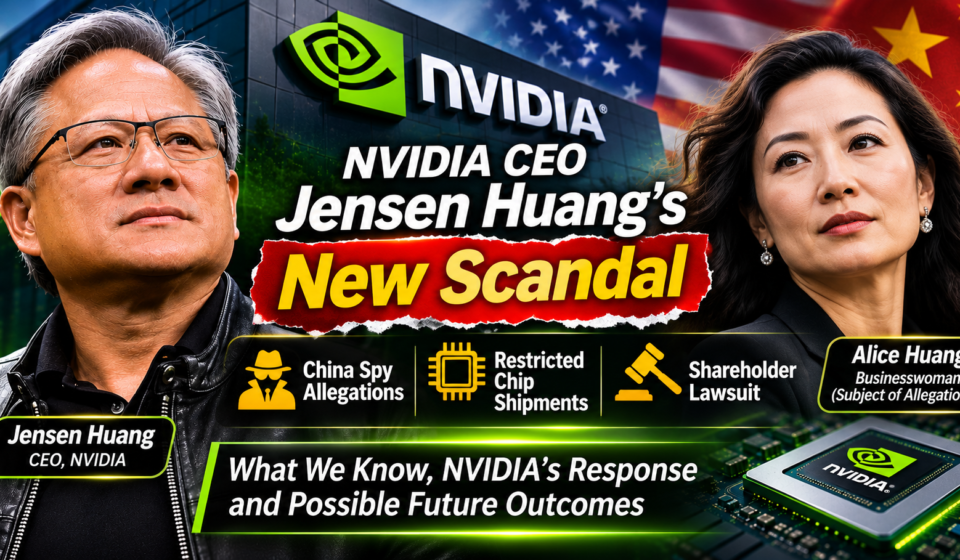
NVIDIA CEO Jensen Huang Scandal: China Spy Allegations Explained

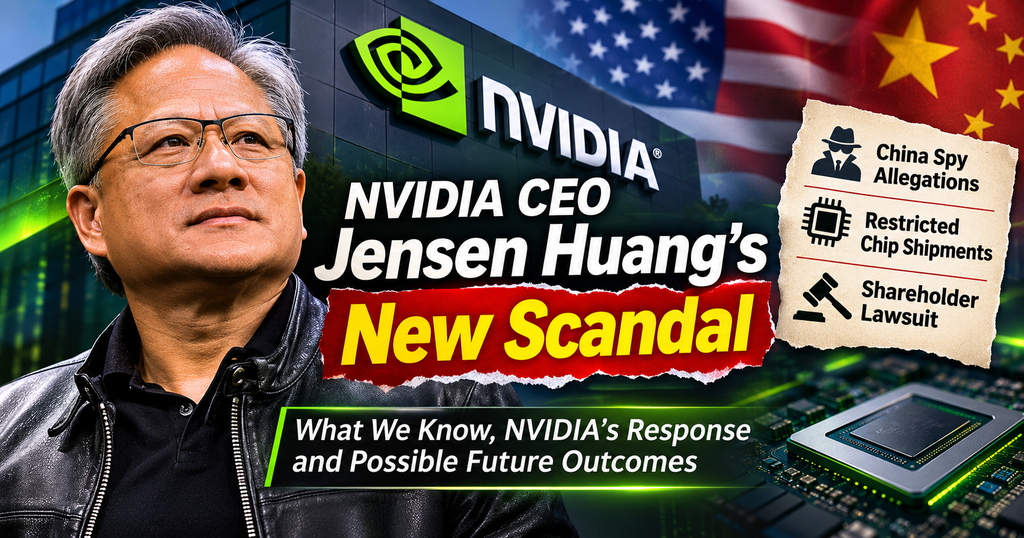
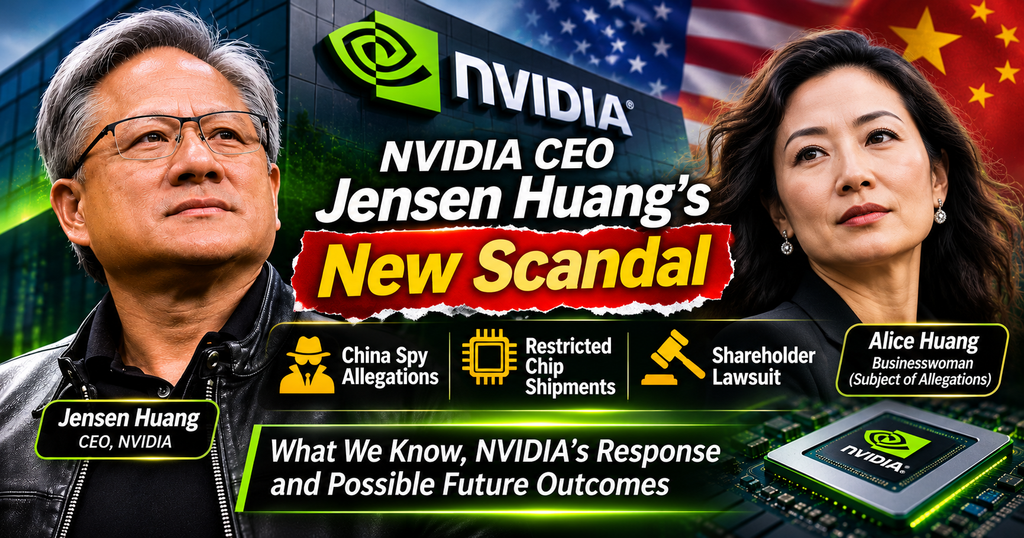
NVIDIA CEO Jensen Huang’s New Scandal: China Spy Allegations, Chip Controversy and What Happens Next?
Table of Contents
- Introduction: Why Is NVIDIA’s CEO Facing a New Scandal?
- Who Is Jensen Huang and Why Does This Matter?
- Who Is Alice Huang and What Are the Allegations?
- The China Connection: What Happened to the NVIDIA Chips?
- What Did Jensen Huang Say About the Controversy?
- NVIDIA’s Official Response and Independent Investigation
- The Shareholder Lawsuit: What Is NVIDIA Accused Of?
- How Has the Scandal Affected NVIDIA’s Stock and Market Value?
- Could Jensen Huang Lose His Position as NVIDIA CEO?
- Possible Future Outcomes for NVIDIA
- What Could Happen to US-China Technology Relations?
- What Investors and Technology Companies Should Watch
- Frequently Asked Questions
- Conclusion: A Serious Test for NVIDIA and Its Leadership
- Sources and Further Reading
1. Introduction: Why Is NVIDIA’s CEO Facing a New Scandal?
NVIDIA has become one of the most powerful companies in artificial intelligence.
Its processors support the development and operation of advanced AI systems.
Demand for computing infrastructure has driven NVIDIA’s business growth yet the NVIDIA CEO Jensen Huang scandal has emerged, affecting the company’s public image. NVIDIA co-founder and CEO Jensen Huang faces scrutiny amid reports linking him to Alice Huang, a Chinese businesswoman. This matter is part of the NVIDIA CEO Jensen Huang scandal. US intelligence-related allegations described in media reports suggest Alice Huang gathered information for Beijing; moves of NVIDIA processors into China.
The controversy became more serious after Jensen Huang acknowledged being unfaithful to his wife in a message to NVIDIA employees. He did not publicly identify the woman involved in the relationship. Meanwhile, NVIDIA’s board announced an independent investigation into reports that its CEO is targeted by a foreign intelligence effort. The issue is therefore much bigger than a reported personal relationship. It raises questions about corporate governance, export-control compliance, national security and the responsibilities of a chief executive whose company supplies technology central to the global AI race.
However, the allegations must be treated carefully. There is no established public finding in the cited reports that Jensen Huang knowingly participated in espionage or that NVIDIA deliberately helped China evade US export restrictions. The board has said it has no reason to believe that national security or company secrets were compromised, although its investigation will examine the available information.
2. Who Is Jensen Huang and Why Does This Matter?
Jensen Huang is the co-founder, president and chief executive of NVIDIA. Born in Taiwan and raised in the United States, he helped establish the company in 1993. Under his leadership, NVIDIA developed from a graphics-processing company into a major supplier of computing technology used in artificial intelligence, scientific research, gaming and data centers.
His influence extends well beyond the company’s products. NVIDIA’s processors have become important to technology companies building large AI models and operating cloud-computing infrastructure. As a result, Huang is one of the most influential executives in the technology sector.
That influence also makes the current allegations particularly serious. A controversy involving a senior executive at a smaller company might remain a corporate governance issue. However, questions involving the head of a company supplying advanced processors to the global AI industry can quickly become a matter of national security.
NVIDIA also has a significant role in the US-China technology competition. Washington has introduced restrictions on the export of certain advanced processors to China because of concerns about their potential military and strategic applications. Consequently, any suggestion that restricted chips reached Chinese customers through indirect business networks is likely to attract close attention from US authorities.
The company is not facing scrutiny simply because of its CEO’s private life. The central questions concern possible access to sensitive business information, the movement of advanced processors and whether existing compliance systems worked as intended.
3. Who Is Alice Huang and What Are the Allegations?
Alice Huang, also known as Huang Le, is the businesswoman at the center of the reports. She has been described as a former executive associated with Megaspeed International, a Singapore-based cloud-computing and data center business.
Media reports have linked her to Jensen Huang through an alleged personal relationship. However, the two individuals are not related, despite sharing the same surname. Jensen Huang has acknowledged being unfaithful to his wife, but his public statement did not name Alice Huang or provide details about the relationship.
The more serious allegations concern Alice Huang’s reported connections to Chinese business interests and possible intelligence activity. Reports citing US intelligence assessments have suggested that she may have gathered information for Beijing. Other reports have examined her business network and its involvement in obtaining NVIDIA processors.
These claims have not been established through a public court judgment. Alice Huang’s alleged intelligence connections should therefore be described as allegations rather than proven facts.
There are also gaps in the publicly available information about her background. For example, some details about her business positions, personal history and whereabouts have not been independently confirmed by major news organizations.
This uncertainty matters because the controversy involves several separate questions. Whether Alice Huang had a personal relationship with Jensen Huang, whether she had connections to Chinese intelligence, and whether her business network violated US export restrictions are different issues. Evidence supporting one would not automatically prove the others.
4. The China Connection: What Happened to the NVIDIA Chips?
One of the most important parts of the controversy concerns the possible movement of advanced NVIDIA processors into China.
The United States has imposed export restrictions on certain high-performance computing chips because of concerns that they could support China’s military and advanced technology development. These restrictions have affected NVIDIA’s ability to sell some of its most powerful processors directly to Chinese customers.
According to reporting by Reuters on November 10, 2026, information published by The Information alleged that Alice Huang and people connected to her had built a network of businesses across China and Singapore to obtain NVIDIA chips. The report described claims that the network helped move approximately 240,000 H100, H200 and some A100 processors into China.
Reuters also reported that the alleged shipments were valued at billions of dollars. The Information’s reporting put the figure at at least $7.5 billion. Some of the processors were reportedly destined for major Chinese technology companies and smaller AI laboratories.
These figures are significant, but they need to be understood in context. Reuters said it could not independently verify all the reported details. The companies mentioned in the reporting were not immediately available for comment, and the allegations should not be treated as a final regulatory or legal finding.
The controversy also raises questions about Megaspeed International and its business relationships. Reports have described links between Megaspeed, Chinese companies and NVIDIA’s partner network. US agencies have reportedly examined whether the business arrangements helped restricted processors reach prohibited destinations.
However, a company purchasing NVIDIA products does not automatically mean that NVIDIA knowingly participated in an illegal transfer. Investigators would need to examine the transactions, the identities of the customers, the relevant export rules and what the parties knew at the time.
That distinction will be central to the investigation. If the allegations are substantiated, authorities may examine whether export-control procedures were bypassed, whether intermediaries misrepresented the final destinations of chips and whether any company or individual knowingly assisted the process.
5. What Did Jensen Huang Say About the Controversy?
However, the NVIDIA CEO Jensen Huang scandal has not dominated his public response. It focuses on his personal conduct and his willingness to cooperate with the investigation.
In a message to NVIDIA employees, he acknowledged being unfaithful to his wife and apologized to his family. He also expressed regret to colleagues, partners and shareholders, recognizing that the controversy had affected confidence in his leadership.
Huang said he would cooperate fully with the review and emphasized his commitment to NVIDIA and US national security.
His admission is relevant because it confirms that he acknowledged infidelity. However, it does not by itself establish the identity of the person involved or prove that he knowingly had contact with a foreign intelligence operative.
According to reporting by The Washington Post, President Donald Trump said he had spoken with Huang and that the CEO told him he had no knowledge that the woman could be involved in espionage. Trump publicly described Huang as an honorable person and expressed confidence in him.
Nevertheless, public support from political leaders does not settle the underlying questions. The independent investigation and any government inquiries will need to assess the available evidence.
For NVIDIA, the immediate challenge is to demonstrate that its leadership understands the seriousness of the allegations and that the company’s internal controls can withstand scrutiny.
6. NVIDIA’s Official Response and Independent Investigation
NVIDIA’s board responded to the controversy by announcing an independent investigation on November 8, 2026.
In its official statement, the company said a committee of independent directors would oversee the review with assistance from outside independent legal counsel. The board also stated that national and economic security were priorities for NVIDIA and its shareholders.
One important part of the statement deserves attention. The board said it had no reason to believe that US national security or NVIDIA secrets had been compromised. However, it also made clear that the investigation would examine all available information.
This is not the same as declaring the allegations false. Rather, it indicates that the board is taking the reports seriously while stating that it has not identified evidence of a compromise at that stage.
The board also said Jensen Huang supported the review and had committed to cooperating fully. It expressed confidence in him and his leadership team.
Subsequent reporting by The Associated Press and The Washington Post said the independent directors retained the law firm Wachtell, Lipton, Rosen & Katz to conduct the investigation. Joon H. Kim, a partner at the firm and a former acting US attorney, was reported to be leading the inquiry.
The investigation will be important for several reasons. It could examine the nature of the reported relationship, any relevant business dealings, the company’s compliance checks involving Megaspeed and whether internal information or commercial decisions were exposed to outside influence.
Its findings could determine whether NVIDIA needs to strengthen its compliance procedures, change its governance arrangements or take action involving senior management.
7. The Shareholder Lawsuit: What Is NVIDIA Accused Of?
The controversy has already moved into the legal arena.
On November 10, 2026, The Associated Press reported that a shareholder had filed a proposed class-action lawsuit against NVIDIA and Jensen Huang in California. The complaint accuses the company and its CEO of misleading investors about the reported relationship and its possible implications.
According to the complaint, the defendants failed to disclose information that the shareholder says could have affected NVIDIA’s reputation, business prospects and share price. The lawsuit also questions previous statements about NVIDIA’s relationship with Megaspeed and the company’s assessment of possible export-control risks.
The plaintiff, identified in reporting as retail investor Mark Kistenmacher, is seeking unspecified damages and a jury trial. The proposed class would cover investors who purchased NVIDIA shares during the period identified in the complaint.
However, filing a lawsuit does not establish that the defendants committed fraud. The claims must be tested through the legal process, and the plaintiff will need to establish the required elements of the case.
NVIDIA and Jensen Huang could challenge the allegations, seek dismissal or defend themselves as the case proceeds. The court will consider the legal arguments and evidence before deciding whether the case can move forward.
The lawsuit creates another problem for NVIDIA because it adds potential legal costs and management pressure to an already sensitive investigation. Even if the company ultimately defeats the claims, the process could keep the controversy in public view for months or longer.
8. How Has the Scandal Affected NVIDIA’s Stock and Market Value?
Financial markets have reacted sharply to the reports.
According to Reuters, NVIDIA lost approximately $430 billion in market value over two trading sessions as the controversy intensified. Reuters also reported that the company’s shares had fallen about 9.5% since the allegations emerged.
The Associated Press reported that NVIDIA shares fell 4.3% on November 10, wiping out around $190 billion in market value during that trading session. The stock continued to decline in the following session, according to the same report.
These movements show how quickly investor sentiment can change when concerns involve a company’s leadership, governance and regulatory exposure.
However, it would be inaccurate to attribute every movement in NVIDIA’s share price to this controversy alone. Reuters noted that investors were already questioning whether the enormous spending on AI infrastructure would generate sufficient returns. Broader market conditions and expectations about future AI demand can also influence the stock.
The scandal adds another layer of uncertainty. Investors may now consider whether the investigation could affect chip sales, export approvals, customer relationships or the company’s reputation with government agencies.
For a company valued in the trillions of dollars, even a small change in investor confidence can translate into a large movement in market capitalization.
9. Could Jensen Huang Lose His Position as NVIDIA CEO?
Jensen Huang’s position is one of the biggest questions surrounding the controversy.
He remains NVIDIA’s chief executive while the investigation proceeds. The board has publicly expressed confidence in him, which suggests that it has not announced an immediate leadership change.
However, that position could change if investigators uncover evidence of serious misconduct, a failure to disclose material risks or a breach of the company’s policies.
There is also political pressure. Reuters reported that Republican Senator Kevin Cramer called for Huang to step down, citing concerns about the possibility of foreign influence or extortion. Such comments show that the issue has attracted attention beyond NVIDIA’s shareholders and technology industry.
Several possible outcomes exist.
First, Huang could remain CEO. If the investigation finds no evidence that he knowingly assisted foreign intelligence activity or compromised company information, the board may decide that he can continue leading NVIDIA. He could still face reputation damage and pressure to rebuild trust.
Second, the board could impose governance changes. Even without finding direct wrongdoing, directors may decide that the company needs stronger oversight, clearer disclosure rules or additional controls around sensitive business relationships.
Third, Huang could step aside or be removed. If serious evidence emerges, the board could consider a leadership transition. That outcome would depend on the investigation’s findings, the company’s governance rules and the board’s assessment of shareholder interests.
At this stage, it would be premature to predict that Huang will resign or be dismissed. The investigation has to establish what happened before such conclusions can be justified.
10. Possible Future Outcomes for NVIDIA
The future impact on NVIDIA will depend largely on what investigators discover and how regulators respond. Several scenarios are possible.
Scenario 1: The investigation finds no evidence of company secrets being compromised
This would be the most favorable outcome for NVIDIA. If the board concludes that the reported relationship did not result in the disclosure of sensitive information or a failure of company controls, the immediate governance risk could begin to decline.
Nevertheless, the company may still need to improve its internal procedures and address concerns raised by investors. The controversy could leave a lasting mark on its reputation even if the central allegations are not substantiated.
Scenario 2: NVIDIA strengthens its compliance and governance systems
A second possibility is that the investigation identifies weaknesses in internal oversight without finding that the company deliberately violated the law.
In that situation, NVIDIA could introduce tighter checks on business partners, improve the monitoring of chip destinations and strengthen reporting procedures for potential conflicts of interest.
These changes could increase compliance costs. However, they could also help the company protect its long-term business relationships and demonstrate that it takes export-control obligations seriously.
Scenario 3: US regulators impose restrictions or penalties
A more serious outcome could follow if government investigations establish that export rules were violated.
Depending on the evidence and applicable law, authorities could impose financial penalties, restrict certain transactions, tighten licensing requirements or take action against companies involved in the alleged shipments.
NVIDIA could face additional scrutiny over its distribution network and customer verification processes. However, any penalty against NVIDIA would require evidence of a relevant legal violation. The existence of suspicious activity by a customer or intermediary would not automatically establish the company’s liability.
Scenario 4: Jensen Huang faces leadership consequences
If investigators find that Huang knowingly ignored serious risks, failed to disclose material information or breached company policies, the board could reconsider his position.
A departure would be a major event for NVIDIA because Huang has led the company since its founding. Investors would likely examine the succession plan, the strength of the remaining leadership team and whether the company’s strategy would remain unchanged.
On the other hand, a leadership transition would not necessarily damage NVIDIA’s underlying technology or customer demand. Its longer-term impact would depend on how smoothly the company managed the change.
Scenario 5: The controversy fades after legal and regulatory reviews
If the investigation finds no serious wrongdoing and the shareholder lawsuit does not progress, the immediate market impact could gradually ease.
Investors may eventually return their attention to AI infrastructure spending, new chip products, data center demand and competition. However, the company would still need to rebuild confidence and demonstrate that its governance systems are reliable.
11. What Could Happen to US-China Technology Relations?
The controversy arrives at a sensitive moment in the competition between the United States and China over advanced computing.
NVIDIA’s processors are valuable because they support the development of powerful AI systems. Washington has sought to limit China’s access to certain advanced technologies, arguing that they could have military and national security applications.
If investigators establish that restricted chips reached China through intermediaries, US officials could respond by reviewing export-control rules and tightening enforcement.
This could affect more than NVIDIA. Other semiconductor companies, cloud-computing providers, distributors and data center operators may face closer scrutiny of their customers and supply chains.
China has rejected the espionage allegations as groundless, according to Reuters reporting. Consequently, the issue could also add diplomatic tension between Washington and Beijing.
However, it is too early to conclude that the controversy will lead to a major change in US-China relations. The eventual impact will depend on the evidence, government decisions and whether the alleged chip transfers are confirmed.
12. What Investors and Technology Companies Should Watch
The coming weeks and months could be important for NVIDIA. Investors should focus on developments that provide evidence rather than relying on speculation.
The first major development will be the independent board investigation. Its findings could clarify whether company information was exposed, whether internal compliance checks were adequate and whether any management decisions require further review.
The second issue is the progress of the shareholder lawsuit. Court filings, responses from NVIDIA and any decisions on whether the proposed class action can proceed will help establish the legal direction of the case.
Third, investors should watch for statements or actions from US government agencies. Any formal export-control action, regulatory finding or criminal investigation would carry more weight than unverified media claims.
Fourth, NVIDIA’s financial results and customer relationships will remain important. If the company continues to report strong demand and maintains its major partnerships, that could help offset some reputation pressure. However, any restrictions on sales or changes in customer access could create a more direct business impact.
Finally, the board’s decisions about leadership and governance will matter. Investors will want to know whether Huang remains in charge, whether independent oversight becomes stronger and whether the company can maintain stability during the investigation.
13. Frequently Asked Questions
1. What is the NVIDIA CEO Jensen Huang scandal about?
The controversy concerns reports linking Jensen Huang to Alice Huang, a Chinese businesswoman suspected in media reports of having connections to Chinese intelligence. It has raised questions about possible foreign influence, restricted NVIDIA chip shipments to China and corporate governance. The allegations have not been established as proven wrongdoing by Jensen Huang.
2. Who is Alice Huang?
Alice Huang, also known as Huang Le, has been described in media reports as a former executive associated with Singapore-based Megaspeed International. Reports have linked her to Jensen Huang and alleged Chinese intelligence activity. Many details about her background and the allegations remain unconfirmed.
3. Did Jensen Huang admit to having an affair?
Jensen Huang acknowledged being unfaithful to his wife in a message to NVIDIA employees. However, he did not publicly identify the woman involved or provide details establishing the full circumstances reported by the media.
4. Is Jensen Huang accused of being a Chinese spy?
The reports concern allegations that he may have been targeted by a foreign intelligence effort. That is different from proving that he knowingly worked for Chinese intelligence. NVIDIA’s board has launched an independent investigation into the reports.
5. Did NVIDIA knowingly send restricted chips to China?
There is no established finding in the cited reporting that NVIDIA knowingly participated in illegal shipments. Reports have alleged that business networks connected to Alice Huang helped move restricted processors into China. The investigation will need to establish what happened and what the relevant parties knew.
6. Why is NVIDIA investigating its own CEO?
NVIDIA’s board announced an independent review after reports raised concerns that Jensen Huang may have been targeted by a foreign intelligence operation. The review is intended to examine the available information and assess possible risks to the company and national security.
7. Has Jensen Huang resigned as NVIDIA CEO?
As of November 11, 2026, the cited reports say he remains CEO while the investigation proceeds. The board has expressed confidence in him, although political and shareholder pressure could influence future decisions.
8. Has NVIDIA’s stock fallen because of the scandal?
Reuters reported that NVIDIA lost about $430 billion in market value over two sessions as the controversy intensified. The stock’s movement can also reflect wider market conditions and investor concerns about AI spending, so the entire decline should not be attributed to this single issue.
9. Could NVIDIA face legal penalties?
Potential penalties would depend on whether authorities establish that NVIDIA or individuals acting on its behalf violated applicable laws. Allegations involving customers or intermediaries alone do not prove that NVIDIA is legally responsible.
10. What is the most likely outcome for NVIDIA?
It is too early to identify a reliable single outcome. The board investigation, government scrutiny and shareholder lawsuit will shape what happens next. NVIDIA could emerge with stronger controls and limited long-term damage, or face more serious consequences if evidence of misconduct or compliance failures emerges.
14. Conclusion: A Serious Test for NVIDIA and Its Leadership
The NVIDIA CEO Jensen Huang scandal has developed into a major test of corporate governance and trust in the technology industry. What began as reports about a personal relationship has expanded into questions about foreign intelligence, restricted AI chip shipments, export-control enforcement and the responsibilities of a global technology leader.
For NVIDIA, the immediate priority is to establish the facts and show that its business practices meet legal and regulatory requirements. The independent board investigation will be central to that process, while the shareholder lawsuit and any government action could create additional pressure.
For Jensen Huang, the challenge is equally serious. His leadership helped turn NVIDIA into a central player in the AI industry, but the company must now assess whether the allegations have exposed weaknesses in its governance or created risks that require a change in leadership. At present, neither the most serious allegations nor the company’s possible legal liability have been conclusively established. Therefore, the outcome should not be treated as predetermined. The real turning point will come when investigators and courts establish what happened, what the people involved knew and whether any laws or company policies were broken. Until then, NVIDIA faces a difficult period in which transparency, accountability and investor confidence will matter as much as its next generation of AI processors.
15. Sources and Further Reading
The following sources provide the main reporting and primary company statement used in this article:
- NVIDIA Board of Directors: Statement from NVIDIA Board of Directors, November 8, 2026
- Reuters: Nvidia faces deepening scrutiny over China chip ties, CEO affair, November 10, 2026
- The Associated Press / The Washington Post: Nvidia and Jensen Huang face shareholder lawsuit alleging investors were misled about spy affair, November 10, 2026
- The Washington Post: What to know about the Nvidia scandal and CEO Jensen Huang, November 9, 2026
Editorial note: This article reflects reporting available on November 11, 2026. Allegations are identified as allegations, and future outcomes are scenarios rather than predictions. Article will be updated as the investigation, court proceedings and regulatory reviews develop.
Related key-phrases: Jensen Huang China spy allegations, NVIDIA scandal 2026, Alice Huang investigation, NVIDIA shareholder lawsuit, NVIDIA stock controversy